U.S. President Trump Owned Millions in Nvidia, Pressed for CEO's Return
The President's financial disclosures reveal a substantial personal stake in the chip developer's market performance.
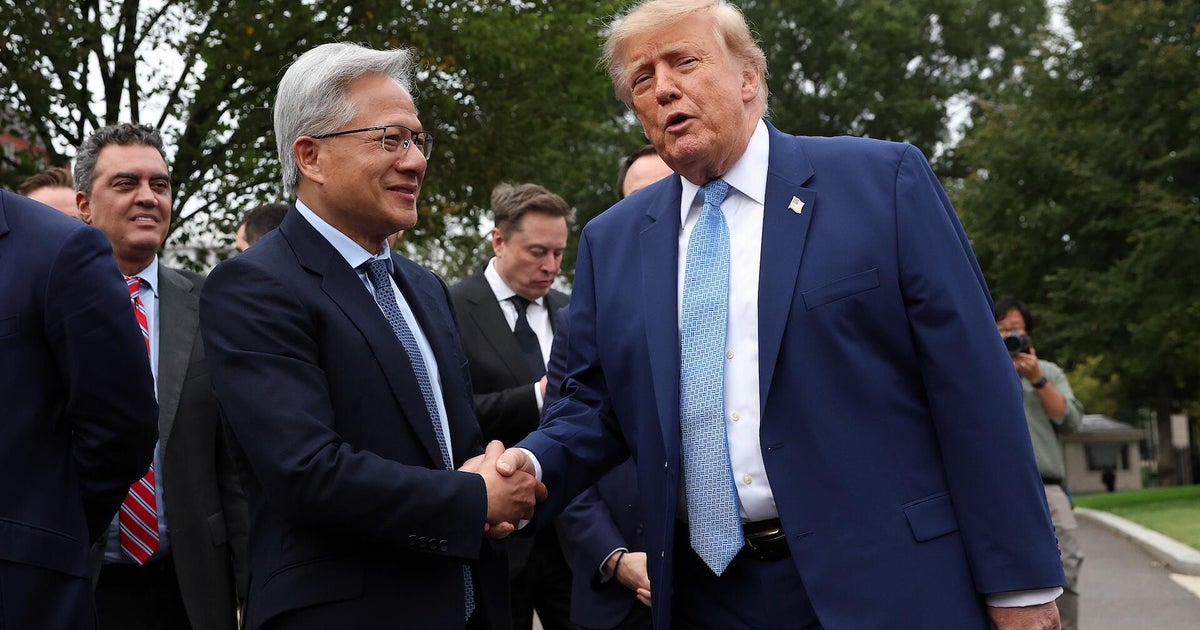
U.S. President Donald Trump held tens of millions of dollars in Nvidia shares as he successfully pressed the chip developer's board to reinstate CEO Jensen Huang. Financial disclosure documents reveal Mr. Trump had a personal stake in the company’s stock market fluctuations, which saw a significant surge after Huang’s return.
Mr. Huang had resigned two weeks prior amid reports of an affair with a suspected Chinese spy, whose company was accused of diverting Nvidia chips to China, and another alleged affair with a subordinate. President Trump stated Monday that he personally spoke with Nvidia's board, "convinced them" to rehire Huang, and offered an "assurance" that no national security threat existed.
As of late 2025, Mr. Trump held between $13 million and $58 million in Nvidia stock within his investment accounts, according to filings with the Office of Government Ethics. He conducted over 100 transactions involving Nvidia stock between January 2025 and September 2026, with values ranging from $27 million to nearly $98 million. The value of his Nvidia shares increased by an estimated $1.3 million to $14.8 million on Monday following Huang's reinstatement, though some gains were pared Tuesday.
A White House spokesman stated Tuesday that President Trump's stock and bond portfolio is independently managed by third-party financial institutions. The spokesman added that Mr. Trump's investments mirror indexes like the Schwab 1000, and that neither the President nor his family can direct or influence investment decisions.
Despite the White House's explanation, ethics experts have raised concerns. Kathleen Clark, a law professor at Washington University in St. Louis, described it as "beyond a conflict of interest," arguing that Mr. Trump "is squarely, explicitly using his power as president to benefit himself financially." Donald Sherman, president of Citizens for Responsibility and Ethics in Washington, called the continued ownership "the clearest example of how the president's personal financial interest makes everything he does suspect."
Richard Painter, a law professor at the University of Minnesota and former chief ethics attorney for the White House, called the intervention "a huge conflict of interest" and an overreach of government power. He noted that current federal conflict of interest law does not apply to the president, vice president, or members of Congress, and advocated for immediate legislative changes to prohibit elected officials from trading individual stocks while in office.
President Trump has defended his intervention, telling reporters that "we have to protect our geniuses." He argued that Nvidia, as the world's leading designer of advanced chips, plays a crucial role in maintaining the U.S.' technological lead over China in artificial intelligence.
More in Technology

UK Supermarket Apologizes After Facial Recognition Error Leads to Shoplifting Ban
Monia Indge was banned for life from a Sainsbury’s branch in London after facial recognition technology triggered a false shoplifting alert. The retailer later admitted a human error occurred during the verification process.

UK Restaurants Grapple With AI Bots Disrupting Online Reservations
UK restaurant owners are struggling with AI bots making and hogging reservations, prompting a shift back to traditional phone bookings as new virtual assistants like Meta Muse launch.

AI Breakthroughs May Challenge Global Encryption Security
Leading experts and the Bank of England governor suggest AI firms may have made a cryptography breakthrough, potentially impacting the security of secret information held by governments and banks.

Experts Warn AI Models Could Soon Decrypt Global Financial Systems
Artificial intelligence labs reportedly possess undisclosed capabilities that could allow for the rapid decryption of private banking, diplomatic, and government communications.
Trending Now on Earth Daily Record